
Manual NEMT Routing with Map Apps: Can You do it? Should you do it?
Manual routing for Non-Emergency Medical Transportation (NEMT) using apps like Google Maps or Waze may seem easy and low-cost, but it quickly becomes inefficient as operations grow. Here's why:
- Challenges with Manual Routing:
- Time-consuming for dispatchers to plan and adjust routes.
- No integration with Medicaid or ADA compliance tools.
- Higher costs from fuel inefficiency and manual labor.
- Struggles with scaling operations and real-time updates.
- Benefits of Specialized NEMT Software:
- Automates route planning and scheduling.
- Integrates compliance and billing systems.
- Reduces operational costs and errors.
- Adapts to real-time changes like traffic or no-shows.
- Scales easily with growing fleets.
Quick Comparison
For small fleets (1-3 vehicles), manual routing might work temporarily. But for medium to large operations, NEMT software is a must for efficiency, compliance, and scalability.
NEMT Dispatch Software: Why It's Essential for Every NEMT Business
1. Using Map Apps for Manual Routing
Let’s dive into how relying on map apps for manual routing impacts key areas of NEMT (Non-Emergency Medical Transportation) operations.
Operational Challenges
Using apps like Google Maps or Waze for manual routing can create serious inefficiencies. Dispatchers have to map out each route manually while juggling multiple vehicles and trips. If there’s a no-show or sudden change in conditions, they need to recalculate routes and inform drivers themselves. This not only slows things down but also lowers overall productivity. On top of that, these apps don’t account for factors like bad weather or accident-prone areas, which can pose safety risks for passengers.
Compliance and Cost Impact
Map apps aren’t designed with NEMT-specific needs in mind. They don’t integrate with Medicaid systems or offer scheduling features that meet ADA (Americans with Disabilities Act) requirements. This gap leads to hidden costs, such as:
- More labor hours for manual route planning
- Extra fuel usage due to inefficient routing
- The need for additional staff to handle compliance issues
- Resources spent fixing mistakes and adjusting routes
Scalability and Communication
As your operations grow, manual routing becomes harder to manage. It struggles to handle real-time fleet coordination, complex multi-stop routes, and peak demand. Dispatchers often have to rely on separate communication tools, increasing the chances of delays and miscommunication.
When schedules change, dispatchers must manually adjust routes and coordinate updates with everyone involved. Specialized software could automate these tasks, but without it, scaling up becomes a logistical nightmare. For growing NEMT operations, manual routing simply doesn’t keep up.
2. Benefits of Specialized NEMT Routing Software
Better Operational Efficiency
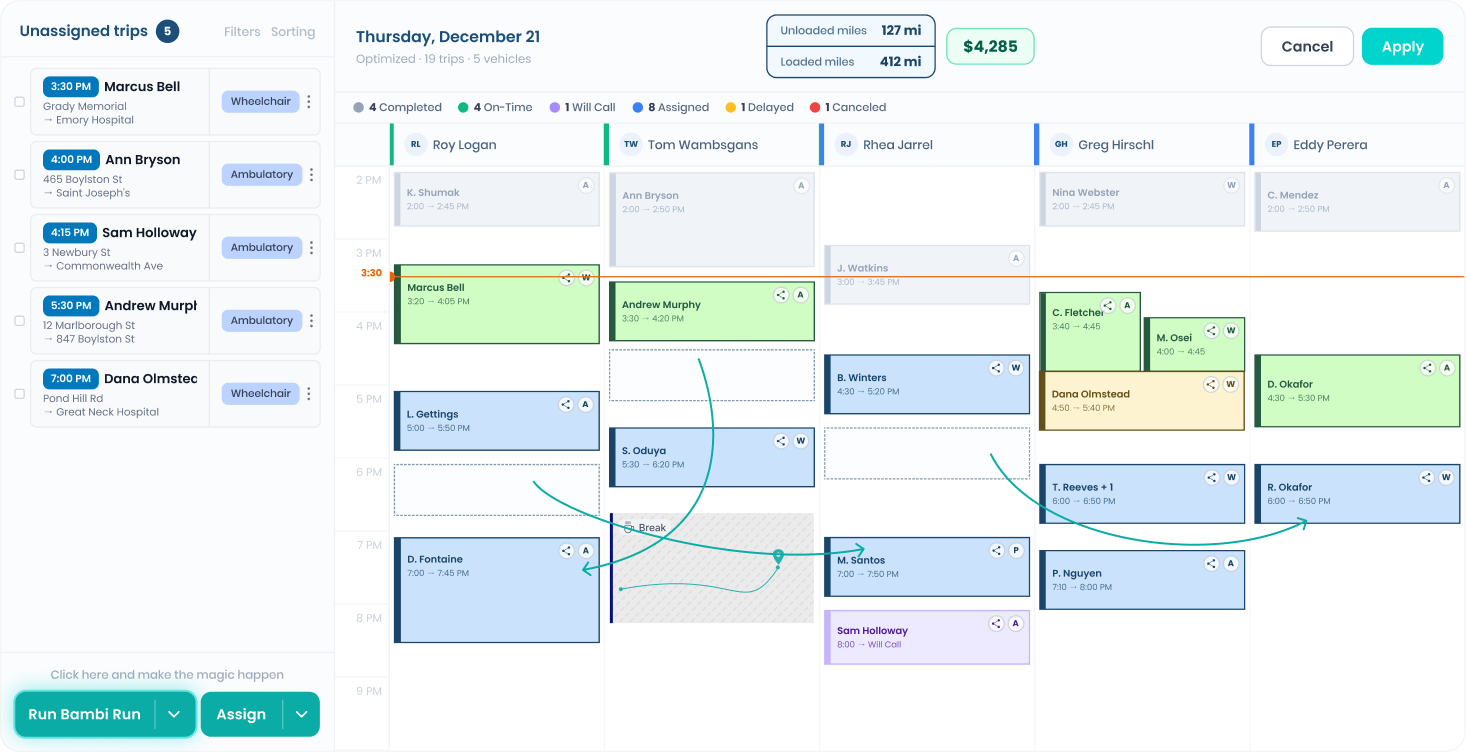
Specialized NEMT software, like Bambi, eliminates the need for manual route planning by automating real-time route optimization and scheduling. It considers multiple variables - traffic, vehicle availability, and more - at speeds no human could match.
Simplified Compliance Management
Modern NEMT platforms, such as MTM's CareConnect, integrate seamlessly with healthcare systems. They automatically track compliance metrics, ensuring adherence to ADA and Medicaid requirements. This eliminates the need for manual tracking and reduces the risk of errors.
Cutting Costs
Specialized software helps cut expenses while improving operations. Here's how:
Cost Area
How Software Helps
Vehicle Use
Matches vehicles to trips based on capacity and distance
Maintenance
Reduces wear and tear with efficient routing
Fleet Management
Uses AI for smarter scheduling and distribution
Billing
Automates claims processing to minimize errors
Real-Time Adjustments
Platforms like Bambi adapt instantly to changing conditions like traffic, weather, or schedule shifts. These systems not only adjust routes on the fly but also improve safety by addressing risks that manual planning might miss.
Improved Safety
Advanced route planning in NEMT software ensures safer trips by avoiding hazardous areas and minimizing risky driving maneuvers. As stated:
"NEMT software optimizes route and digitizes route information, helping reduce billing errors. Precise scheduling. Planning trips manually takes a lot of time."
This focus on safety benefits both passengers and drivers.
Handling Growth with Ease
When demand increases, manual systems often struggle. Specialized software, like Bambi, offers tools like automated multi-stop routing, real-time fleet tracking, and integrated dispatch communication. These features make it easier for providers to scale their services without losing efficiency or control.
Advantages and Drawbacks
When deciding on routing solutions for NEMT (Non-Emergency Medical Transportation) operations, providers need to weigh the pros and cons of manual routing with map apps against specialized software. Here's a closer look at the key differences that affect efficiency and outcomes.
Cost Considerations
Map apps might seem like a cheaper option upfront, but the inefficiencies tied to manual routing can add up quickly. Hidden costs like overtime, delays, and compliance issues can overshadow any initial savings. Beyond cost, the operational differences between these two approaches are even more striking.
Operational Capabilities
The differences between manual map apps and specialized NEMT software become clear when looking at their features:
Performance Impact
Real-world cases underline the benefits of specialized software. For instance, Mitchell County Transportation saw a major boost in efficiency after switching from manual routing. This change reduced the workload for dispatchers and streamlined daily operations.
Scalability Factors
Map apps often fall short when operations grow more complex. They struggle with tasks like:
- Coordinating multiple pickups and drop-offs
- Handling intricate scheduling needs
- Making real-time route changes
- Integrating with healthcare systems
As operations expand, managing compliance and safety becomes increasingly challenging without the right tools.
Compliance and Safety
Specialized platforms, like Bambi, simplify compliance by automating tracking and reporting tasks. Unlike basic map apps, these systems ensure your operations meet regulatory requirements with ease.
Choosing between manual routing and specialized software depends on the size and complexity of your operation. While map apps might feel familiar and require little upfront investment, they often lack the functionality needed to support the demands of modern NEMT services. Specialized software offers a more comprehensive solution for growing and adapting to industry needs.
Final Thoughts
Choosing the right approach for NEMT routing depends on your operation's size and future goals. While manual routing with map apps might work for very small operations, it quickly becomes inefficient as your fleet grows.
Here’s a quick breakdown of recommended solutions based on fleet size:
For fleets larger than three vehicles, manual routing is no longer practical ad NEMT software is critical. Bambi offers tools for automated routing, compliance management, and real-time tracking, which are especially useful for medium to large operations. Dispatcher users of Bambi have reported better efficiency and improved compliance after transitioning from manual systems.
Specialized NEMT software is designed to handle the unique needs of the industry, such as Medicaid regulations and complex multi-stop scheduling. By automating key tasks like routing, compliance, and billing, these tools save both time and money, making them essential for providers looking to expand.



.webp)